
The central government's Great Nicobar development project, proposed around an unprecedented transhipment port, will be executed to keep environmental impact minimal, and is essential as it is of national importance, the government has said amid calls to abort the controversial project due to ecological concerns, the Centre said in an official statement.

'Over the next two quarters, markets will be guided by observing the earnings resilience of corporates during the second lockdown, progress of the monsoon and the damage, if any, to rural spending power due to the second wave.'

Quarterly earnings of corporates, trading activity of foreign investors and inflation data are the key factors that are expected to drive the momentum in the equity markets this week, analysts said.

'If because of El Nino, the monsoon is affected adversely in the current year, naturally it will affect income projections and consequently Budget numbers.'
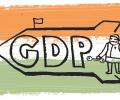
Sectors such as electronics, pharmaceuticals and automobiles can see supply disruptions in value chain, which may lead to a derailment of the domestic economic growth.

Private equity (PE) activity in India between January and November 2024 recorded a total value of $30.89 billion across 1,022 deals, a 22.7 per cent increase in value and an 18.4 per cent rise in deal count compared to $25.17 billion across 863 deals during the same period in 2023. Notable large deals during the period include Walton Street India Investment Advisors at $1.5 billion, and KiranaKart Technologies at $1.35 billion.
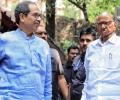
'If you stay out of power for long, you become irrelevant, your party members become restless and start looking to jump ship.'

'Maharashtra is virtually in a debt trap.'

From the Sensex pack, Adani Ports & Special Economic Zones, Mahindra & Mahindra, Reliance Industries, HDFC Bank, Larsen & Toubro, NTPC, State Bank of India, UltraTech Cement and Kotak Mahindra Bank were the major gainers. In contrast, Tata Steel, Titan, Bajaj Finserv, JSW Steel, Bajaj Finance, Hindustan Unilever, ITC, Tata Motors and Tata Consultancy Services were among the laggards.

Deaton was at a loss when asked what the future held.

There is nothing to be worried about as bilateral ties are robust with solid foundations. Both are on the same page on the economic and defence/security ties bilaterally and globally and that shall continue irrespective of change in political dispensation in either country, points out Dr Rajaram Panda.

'Tensions and dialogue are likely to go hand-in-hand with China.' 'The goal should be to cultivate power so that one can negotiate from a position of strength.'

The Lok Sabha elections in 2024 are not a consideration when it comes to monetary policymaking, said Reserve Bank of India governor Shaktikanta Das to underscore the central bank's commitment to controlling inflation. "It's not possible for me to comment what we do in the next MPC (Monetary Policy Committee), but one thing I can tell and I would like to make it very clear-that the fact of elections coming up in 2024 is not a factor at all so far as monetary policymaking is concerned. "Monetary policymaking is for checking (and) controlling inflation," Das said at the Business Standard, BFSI Insight Summit.

'Whether I am optimistic or pessimistic is not the issue; I am just going by the evidence available.' 'The Indian economy and financial sector are now well-placed and very resilient in dealing with any kind of spillover coming from the external world.'

'As much as $4 billion in India's start-up companies has come from Chinese funds.' 'Government policy must not remain indifferent to the problems India's start-up ventures are likely to face after the change in FDI rules,' says A K Bhattacharya.
Various global and domestic factors had a sizable impact on the performance of the Indian markets

The Reserve Bank of India on Friday revised upwards the GDP growth projection for the current fiscal to 7.2 per cent from 7 per cent on rising private consumption and revival of demand in rural areas. Unveiling the bi-monthly monetary policy, RBI Governor Shaktikanta Das said estimates released by the National Statistical Office (NSO) placed India's real gross domestic product (GDP) growth at 8.2 per cent in 2023-24. "During 2024-25 so far, domestic economic activity has maintained resilience," he said, adding that manufacturing activity continues to gain ground on the back of strengthening domestic demand.

'The economy is clearly at a very soft spot, and earnings growth is disappointing every day.' 'After three great years, the Indian economy has hit a rough patch.'
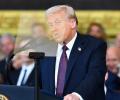
Donald Trump's exaggerated opinion of his dealmaking capacity can get him into trouble, observes R Sriram.

India needs to recognise and address challenges posed by its dependence on China for critical minerals and examine the implications of phasing down coal on bank balance sheets as it accelerates its green transition, the government's Economic Survey 2023-24 tabled in Parliament on Monday said. As part of its national plan to contribute to meeting the global goal of limiting the average temperature rise to 1.5 degrees Celsius, India has committed to reducing emissions by 45 per cent below 2005 levels by 2030, achieving 50 per cent cumulative electric installed capacity from non-fossil fuel-based energy resources, and creating a carbon sink of 2.5 to 3 gigatons of CO2 equivalent through additional forest and tree cover.

International Monetary Fund Chief Economist Gita Gopinath tells Indivjal Dhasmana high-frequency indicators for the third quarter of 2021 indicate momentum in economic recovery in India.
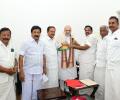
EPS has had its way on most things, alliance-wise. A week earlier, he reiterated that he would not re-admit OPS and Sasikala Natarajan back in the party. It was a message not just to detractors in the AIADMK. It was even more so for the BJP leadership in Delhi. Even more important for the AIADMK was their demand for accepting EPS as the chief ministerial candidate of any alliance that the party would form, observes N Sathiya Moorthy.

Many industry executives have said the draft e-commerce policy is being perceived as nationalistic but not overly protectionist and it is providing preference to Indian players against foreign companies. This might have an impact on investment by large players such as Walmart and Amazon in the country, said the executives. They said e-commerce was a very small portion of the retail industry and at a nascent stage and did not require heavy hammer regulations. Though the policy talks about being equally applicable to foreign and domestic players, it mentions that foreign direct investment (FDI) takes precedence over the e-commerce policy in any area of overlap.

'In the new coalition government, India's reform agenda may prioritise job creation and factor market reforms.'

Few finance ministers announce any taxation measure that could upset the stock market. Ms Sitharaman decided to take that risk, observes A K Bhattacharya.

'I am optimistic about the Budget because of the fiscal discipline the government has committed to.'
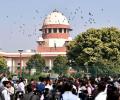
'A rigid or overly broad interpretation could lead to a chilling effect on investments and growth in sectors traditionally driven by private initiative.' 'Entrepreneurs may fear that their assets could be arbitrarily appropriated by the State under the guise of serving the 'common good' without sufficient legal safeguards.' 'The judgment thus supports a more nuanced view, one that balances individual property rights with public welfare objectives.'

Chief Economic Adviser K V Subramanian on Monday said the overall impact of the second wave of COVID-19 on the country's economy is not likely to be large but cautioned about an uncertainty surrounding the pandemic going ahead. He further said that given the circumstances due to the pandemic, it is difficult to forecast if the country would achieve a double digit growth in the current fiscal. The Economic Survey 2020-21 released in January this year had projected GDP growth of 11 per cent during the current financial year ending March 2022.
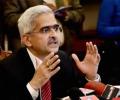
Reserve Bank Governor Shaktikanta Das has pitched for policy support from all sides -- fiscal, monetary and sectoral -- to nurture recovery of the economy hit by the second wave of the coronavirus pandemic. The dent on economic activity due to the second wave of the pandemic during April-May necessitated continuation of monetary measures to support the process of economic recovery to make it durable, Das had said while participating in the meeting of the Monetary Policy Committee (MPC) earlier in the month. "Overall, the second wave of COVID-19 has altered the near-term outlook, and policy support from all sides - fiscal, monetary and sectoral - is required to nurture recovery and expedite return to normalcy," Das said, as per the minutes of the meeting released on Friday.
All members of the Monetary Policy Committee (MPC) -- Shashanka Bhide, Ashima Goyal, Jayanth R Varma, Mridul K Saggar, Michael Debabrata Patra and Shaktikanta Das -- had unanimously voted to keep the policy repo rate unchanged at 4 per cent after the three-day meet of the panel earlier this month. Further, except Varma, other members voted to continue with the accommodative stance as long as necessary to revive and sustain growth on a durable basis and continue to mitigate the impact of COVID-19 on the economy, while ensuring that inflation remains within the target going forward. Varma expressed reservations on this part of the MPC resolution, according to the minutes.

The United Kingdom extracted USD 64.82 trillion from India over a century of colonialism between 1765 and 1900 and USD 33.8 trillion of this went to the richest 10 per cent -- enough money to carpet London in notes of 50 British pound almost four times over.

Their favourite alternatives: Malaysia, Vietnam and the Philippines. Note, India is missing from that list. And this is despite an attractive financial incentive scheme for OSAT players. The reason, said a senior executive of a US chip company who had a meeting in Taiwan just a few weeks ago, is that "they want more predictability in government policy because they plan to put in big money."

It said the recovery is constrained by ongoing human and economic cost of Covid-19 pandemic and negative impact of food price inflation on private consumption. The report said India, which experienced a contraction of 7 per cent in 2020, showed a strong quarterly growth of 1.9 per cent growth in the first quarter 2021 on the back of the momentum of the second half of 2020 and supported by government spending in goods and services.

'Trump's disregard for norms and institutions could prove very costly for America's social fabric.'

The prime minister's August 15 address was undoubtedly inspirational and outlined important economic and social objectives, such as making India a global hub for manufacturing, ensuring bank accounts for all poor families, major thrusts in sanitation and cleanliness, and a radical restructuring of the Planning Commission.
India's economy is unlikely to see double-digit growth and may grow between 8 per cent and 9 per cent this fiscal year (2021-22, or FY22), against the estimated 11.5 per cent, according to leading economists and rating agencies. The downward revision of growth projections to as low as 10 per cent is mostly on account of stringency in restrictions by states, relatively slow vaccination pace, and the possibility of a third wave of the pandemic. However, they say the impact will not be as severe as the first wave, and expect the first quarter to see positive growth.

Since 2014, many of Mohan Bhagwat's speeches have acted as cues for government policy.

Domestic macroeconomic data announcements, global trends and trading activity of foreign investors would guide market sentiments this week, analysts said. After a record rally, markets may face volatile trends this week amid elevated valuations and investors would also keep a track of global oil benchmark Brent crude and rupee-dollar movement for further cues. "Potential volatility in the stock market is anticipated this week. Elevated valuations remain a concern, with investors now focusing on monsoon progress and its impact on the rural economy.

"He's made economics more human," the Nobel jury said

With the world's worst outbreak of COVID pandemic stalling a nascent economic recovery, the government has begun assessing the impact of the second wave of infections on different sectors and may look at providing support at an appropriate time to segments requiring fiscal help. Some of the economic indicators, including the Goods and Services Tax (GST) collections, still provide confidence and incoming data will throw some more light on the state of the economy, sources said. Services sectors like hospitality, tourism and aviation which had just started recovering were hit hard by the second wave of COVID, the sources said, adding these segments might need some support on an urgent basis from the government.
